
 By Arthur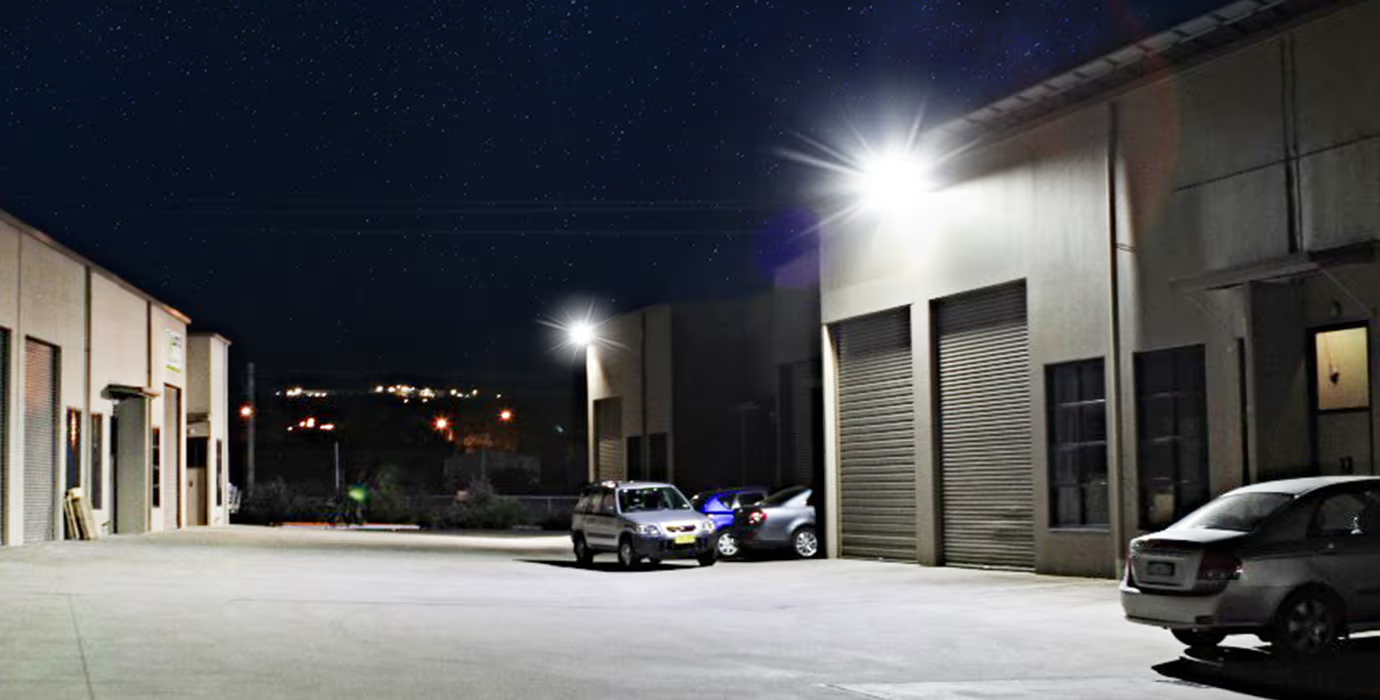
LED wall pack lights are outdoor fixtures mounted flat against building walls. They shine light downward and outward. These fixtures replace older metal halide and halogen lights. They work for security, entry lighting, and general outdoor illumination.
A wall pack light needs no pole or extra structure. It pulls power from your existing electrical system. Light spreads across parking lots, entries, and building fronts.
These fixtures save significant energy compared to traditional outdoor lights. A 60-watt LED wall pack produces as much light as a 150-watt metal halide fixture. Most LED models last 50,000+ operating hours. That’s 10+ years of typical nighttime use without replacement.
Why Your Property Needs These Lights:
- Mount easily on any existing building surface
- Start at full brightness instantly with no warm-up time
- Last 10+ years without bulb replacement
- Work reliably in freezing rain, snow, and extreme heat
- Reduce monthly energy costs by 50-75%
- Require almost no maintenance once installed
- Provide bright, uniform lighting across large areas
- Available in different styles for various building types
- Lower your electricity bills immediately
- Minimize maintenance visits compared to older fixtures
Real Energy and Cost Savings
LED wall pack lights cut energy use by 50-75% compared to older fixtures. A standard 60-watt LED replaces a 150-watt metal halide light. That 90-watt difference adds up quickly.
Consider a parking lot with 20 lights running 12 hours nightly. Traditional 150-watt fixtures use 36 kilowatts daily. Switching to 60-watt LED units drops that to 14.4 kilowatts. The yearly electricity cost difference reaches $3,000-5,000.
LED wall pack lights reach full brightness instantly. Older fixtures took 3-5 minutes warming up. You paid for that wasted time with no benefit. LEDs eliminate this entirely.
The lifespan difference saves substantial money. Replace traditional 150-watt fixtures every 2-3 years. An LED lasts 10+ years. You save on replacement costs and labor. A maintenance crew visiting 20 fixtures multiple times yearly adds up fast.
Initial costs run $150-400 per fixture before installation. Commercial-grade models cost more than residential units. However, most properties see full payback in 2-4 years. After that, it’s pure savings.
Some regions offer utility rebates for LED upgrades. Rebates range $50-200 per fixture. This cuts payback time to 1-2 years. Check with your utility company first.
Real Money Numbers:
- A 60-watt LED saves $40-50 yearly versus 100-watt equivalents
- 10 fixtures save $400-500 annually on electricity alone
- Maintenance cost reductions add another $300-400 yearly
- 50 fixtures cut energy expenses by $2,000-2,500 per year
- Full payback typically occurs in years 2-3
- Years 4-10 deliver pure profit with minimal costs
- 10-year total savings exceed $5,000-7,500 per installation
Types of LED Wall Pack Lights
Semi-cutoff models direct light downward and slightly outward. They minimize glare and light pollution. These work best for most parking lots and commercial buildings. Light spreads down at a 90-150 degree angle.
Full-cutoff designs send almost all light straight down. Sky glow is nearly eliminated. These meet strict environmental regulations in many areas. Communities near observatories require them. Upward light stays below 2.5% of total output.
Non-cutoff fixtures scatter light in all directions. They work for accent lighting and building highlights. Use them where light pollution isn’t a concern.
Residential models are smaller and decorative. They’re typically 26-40 watts. Colors include black, bronze, and stainless steel. They work on home entries, garages, and side porches.
Commercial grades are tougher and larger. They handle 60-120 watts of power. They resist harsh weather and vandalism. Parking lots and warehouses use these exclusively.
Photocell versions turn on automatically at dusk. They turn off at dawn. No manual switching needed. This saves energy on long winter nights automatically.
Choosing the Right Type:
- Semi-cutoff for parking lots and driveways
- Full-cutoff for environmentally sensitive areas
- Non-cutoff for accent and decorative lighting
- Residential sizes for home security
- Commercial grades for industrial facilities
- Photocell models eliminate manual control
- Motion sensors add extra security features
- High-wattage units for large open areas
Key Specifications Explained
Lumens measure total visible light output. A 26-watt residential unit produces 2,700 lumens. A 120-watt commercial unit produces 17,400 lumens. More lumens mean brighter illumination. Large parking lots need more lumens. Smaller spaces need fewer lumens.
Wattage shows power consumption. LED efficiency means lower wattage than old fixtures. A 60-watt LED replaces a 150-watt metal halide. You get more light from less power.
Color temperature affects how light appears. 3000K looks warm and yellowish. 5000K looks cool and daylight-like. Residential applications often use 3000K. Commercial prefers 5000K for clarity.
Beam angle shows how wide light spreads. A 90-100 degree spread covers parking lots well. A 70-80 degree spread concentrates light. A 110-120 degree spread covers very wide areas.
IP rating indicates weather protection. IP65 means dust-tight and resistant to water jets. This is standard for outdoor LED wall pack lights. Most outdoor applications never need higher ratings.
CRI (Color Rendering Index) affects how colors appear under the light. 70+ CRI shows colors reasonably well. 80+ CRI shows colors very accurately. This matters most for retail and display areas.
Technical Specs Summary:
- Lumens range: 2,700 to 17,400 depending on wattage
- Wattage options: 26, 40, 60, 80, 100, 120 watts
- Color temperatures: 3000K warm, 5000K daylight
- Beam angles: 70-120 degrees for coverage
- IP ratings: Most are IP65 standard
- Lifespan: 50,000 to 100,000 operating hours
- Input voltage: 100-277V compatibility standard
Where LED Wall Pack Lights Work Best
Parking lots need bright, even lighting for safety. Good lighting prevents accidents and theft. LED wall pack lights mounted on perimeter buildings work perfectly. Twenty-foot-high mounted fixtures cover large areas effectively.
Building entry points need welcoming illumination. A 40-60 watt LED wall pack lights entries clearly. Automatic sensors turn them on at dusk without fail.
Loading docks and warehouse areas require high visibility. 80-120 watt LED wall pack lights provide strong, reliable illumination. They handle rough industrial use without issues.
Retail store fronts benefit from accent lighting. LED wall pack lights highlight merchandise and signage effectively. Warm color temperature (3000K) draws customers in naturally.
Residential properties use smaller fixtures for security and appearance. Front porches, side doors, and back patios all benefit. 26-40 watt models provide enough light for home security.
Garage exteriors stay well-lit and safe with wall pack fixtures. Motion sensors reduce energy use when nobody’s present.
Public facilities like community centers use them for security. Libraries, parks, and recreation areas employ wall pack lighting effectively.
Perfect Installation Locations:
- Corners and edges of parking lots
- Building entries and exits
- Warehouse and industrial building sides
- Dock loading areas
- Residential garage areas and porches
- Retail storefront display areas
- Pedestrian walkways and pathways
- Vehicle maintenance areas
Installation Basics
Mount LED wall pack lights 10-20 feet high on walls. This height covers large areas effectively. Lower mounting creates brighter spots with darker edges. Higher mounting spreads light more evenly across space.
Find a sturdy wall section that can support fixture weight. Most wall packs weigh 5-10 pounds. Concrete or metal building walls work perfectly. Avoid thin vinyl or damaged surfaces.
Hire a licensed electrician for electrical connections. Most locations require professional installation. The electrician runs wiring to your electrical panel. They ensure the work meets local building codes. This protects your investment completely.
Use weather-resistant fasteners and protective conduit. Stainless steel hardware resists corrosion effectively. Conduit shields wires from moisture and damage. Proper sealing prevents water from entering fixtures.
Mount photocells facing the night sky, not building lights. They need to see actual darkness. If they face a brightly lit wall, they malfunction. Proper orientation ensures reliable automatic operation.
Point beam angle toward areas needing light. Adjust fixtures after installation if needed. Make sure light reaches parking areas clearly. Avoid shining directly at neighboring properties.
Installation Checklist:
- Choose mounting height between 10-20 feet
- Verify wall can support fixture weight
- Hire licensed electrician for electrical work
- Use corrosion-resistant fasteners
- Install protective conduit for wiring
- Seal all openings against moisture
- Orient photocells to face open sky
- Angle beam toward intended area
- Test operation before finalizing
- Document installation for warranty
Maintenance and Upkeep
LED wall pack lights need very little maintenance. There are no bulbs to replace. There’s no ballast requiring service. The main task is keeping them clean.
Dust accumulates on the lens over time. Clean the lens every 3-6 months depending on environment. Use a soft cloth and mild soap solution. Don’t use harsh chemicals or abrasive materials.
Inspect fixtures quarterly for damage or water entry. Look for cracks, loose hardware, or corrosion. Address problems immediately before they worsen.
Check electrical connections twice yearly for tightness. Vibration from wind can loosen connections over years.
For photocells, keep them clean and unobstructed. Remove leaves or debris around the sensor. They need clear access to the sky for proper operation.
In coastal areas with salt spray, wipe down fixtures monthly. Salt speeds corrosion significantly. Regular cleaning extends life dramatically.
LED components rarely fail even after 10+ years. When replacement finally comes, new LED wall pack lights cost far less than extensive repairs.
Annual Maintenance Tasks:
- Clean lens and housing quarterly
- Check electrical connections twice yearly
- Inspect for physical damage monthly
- Verify photocell operation seasonally
- Clear debris around sensors
- Test light output to verify operation
- Replace any fasteners showing corrosion
- Seal any cracks forming
Modern Features Worth Considering
Smart LED wall pack lights connect to WiFi. You control them from your phone remotely. Set schedules that adapt to seasons automatically.
Some models detect motion while you’re away. They dim or brighten based on activity. This saves energy significantly. Full brightness returns when motion is detected.
Energy management software tracks individual fixture performance. You identify underperforming units quickly. You spot maintenance needs before failures occur.
Solar-hybrid models charge during the day. They use stored power at night. This reduces grid demand and cuts electricity costs further.
These newer features cost more upfront. However, savings and convenience often justify investment over time.
Modern Features Available:
- WiFi connectivity for remote control
- Motion and occupancy detection sensors
- Mobile app operation and scheduling
- Tunable color temperature adjustment
- Solar charging capability
- Automated performance monitoring
Final Thoughts
LED wall pack lights deliver real value through lower energy bills and reduced maintenance costs. The math is straightforward. You spend more upfront but save thousands over 10 years.
Most commercial properties see payback within 2-4 years. After that, savings continue for another 6-8 years. That’s solid investment return.
Quality LED wall pack lights from established manufacturers offer the best value. They last longer. They perform reliably. They earn proper certifications.
Your property deserves reliable outdoor lighting. LED wall pack lights provide that while saving money consistently. The combination of performance and savings makes them the clear choice today.
You May Also Like: How Professionals Ensure Your Lights Last All Season