
 By Arthur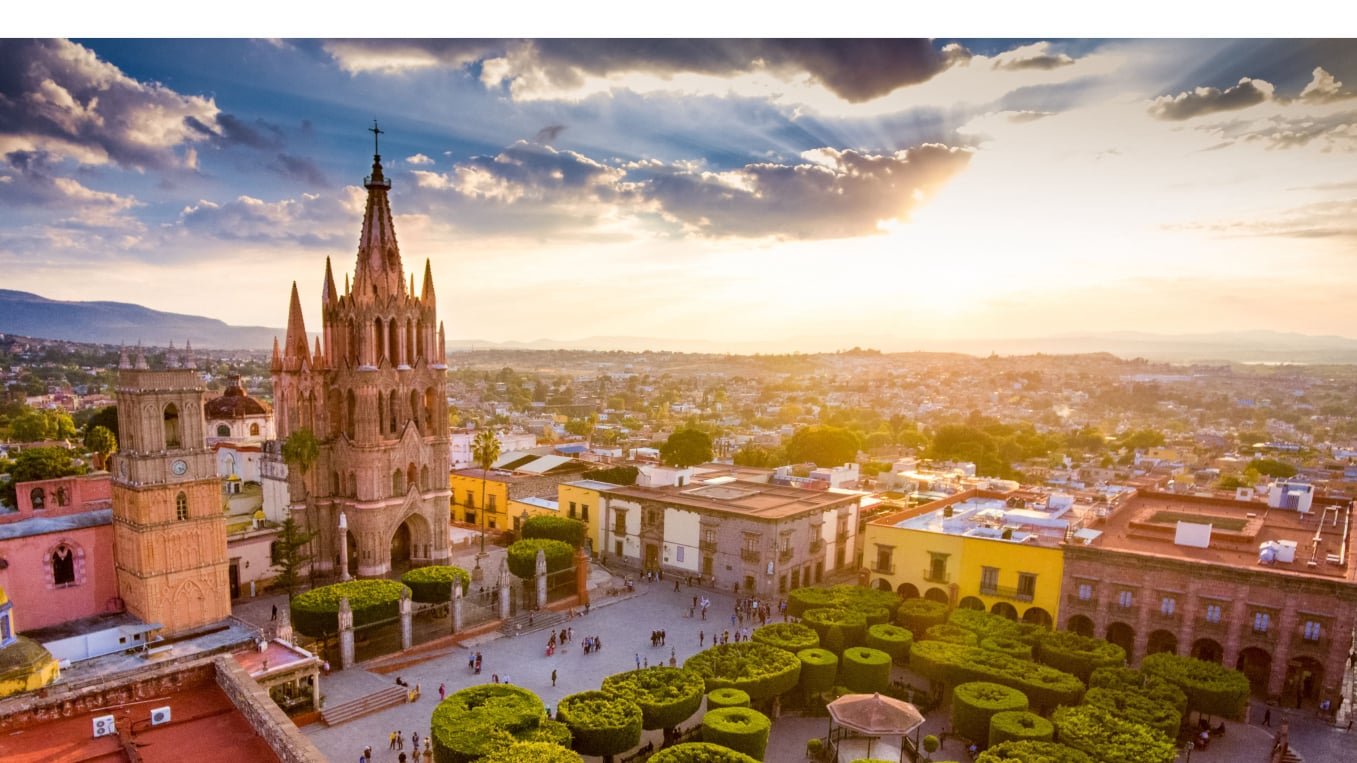
Roughly one million Americans currently live in Mexico full-time, and that number climbs every year. Yet for every buyer who finds their perfect fit, there’s another who buys in the wrong city for their lifestyle and spends the next two years wondering why it doesn’t quite feel like home.
The three cities that come up most often in these conversations are Puerto Vallarta, Los Cabos, and San Miguel de Allende. Each one is genuinely excellent. Each one is also genuinely wrong for certain buyers. The key is understanding which profile fits where, and being honest about the trade-offs before you sign anything.
This guide breaks it down by buyer type: retiree, digital nomad, and vacation investor. Not every person fits neatly into one box, but most buyers lean heavily toward one set of priorities. Start with your primary motivation and work outward from there.
The Retiree: Lifestyle First, Cost Second
Retirees moving to Mexico are usually optimising for a combination of things: affordable daily life, good healthcare access, a walkable or community-driven environment, and a social scene that doesn’t require being 32 years old to enjoy it.
Puerto Vallarta for Retirees
Puerto Vallarta has one of the most established expat retirement communities in Latin America. The Romantic Zone and Versalles neighbourhoods are walkable, filled with independent restaurants, and home to a dense network of English-speaking residents who have been there for decades.
Healthcare is a genuine strength here. The city has multiple private hospitals with internationally trained staff, and costs run roughly 60–80% lower than comparable care in the US. For retirees who need regular specialist visits or worry about medical emergencies, that matters enormously.
The honest trade-off: Puerto Vallarta is humid. From June through October, it is hot and wet in a way that some retirees find uncomfortable. If you are coming from a dry climate, spend time there in August before committing.
Los Cabos for Retirees
Los Cabos, particularly the San José del Cabo side, has a quieter, more laid-back character than most people expect. The tourist infrastructure is excellent, which means restaurants, services, and English-language amenities are easy to access. For retirees who want resort-quality convenience without actually living in a resort, it delivers.
The climate is reliably dry and warm. No muggy summers, no rainy-season flooding. For retirees from the American Southwest or California, it often feels immediately familiar.
The honest trade-off: Los Cabos is expensive relative to other Mexican markets. Property prices are higher, and daily costs reflect the premium tourism economy. Retirees on tighter fixed incomes may find it stretches the budget further than anticipated. Healthcare infrastructure, while improving, is less robust than Puerto Vallarta.
San Miguel de Allende for Retirees
San Miguel is arguably the gold standard for retiree expat communities in Mexico. It has a long-established American and Canadian population, world-class cultural events, a walkable historic centre, and a pace of life that genuinely encourages slowing down.
The altitude (around 1,870 metres) keeps temperatures mild year-round, which many retirees prefer. No air conditioning required for most of the year.
The honest trade-off: San Miguel is landlocked. If you were picturing ocean views and beach mornings, this is not your city. It also sits far from a major international airport, which makes travel back to the US or Canada more logistically involved. Medical facilities have improved but remain limited compared to larger coastal cities.
The Digital Nomad: Infrastructure Meets Inspiration
Digital nomads need reliable internet, a productive environment, a social scene that skews younger, and enough variety in daily life to stay stimulated during longer stays. A beautiful view helps, but it is not a substitute for a fibre connection.
Puerto Vallarta for Digital Nomads
Puerto Vallarta has quietly become one of the better nomad bases on Mexico’s Pacific coast. Co-working spaces have expanded significantly in the last few years, particularly in Versalles and the Fluvial neighbourhood. Fibre internet is widely available in most central areas, and backup mobile data on Telcel or AT&T Mexico covers most connectivity gaps.
The city rewards exploration. It has a creative local arts scene, a thriving food culture, and enough neighbourhood variety that you can rotate your daily environment without hopping cities. Long-term rental prices for furnished apartments are still reasonable relative to what you’d pay in Mexico City or Tulum.
The honest trade-off: Puerto Vallarta is not a major tech or startup hub. If your work involves frequent in-person meetups with other professionals, the ecosystem is thinner than you’d find in CDMX or Monterrey.
Los Cabos for Digital Nomads
Los Cabos is a surprising fit for nomads with higher income or those who blend work with lifestyle heavily. The infrastructure is excellent. Internet reliability in well-developed areas like Cabo San Lucas and San José del Cabo is strong, and the overall standard of living is high.
Nomads who need to close deals, impress clients, or simply want to work from a rooftop terrace with desert-meets-ocean views will find the environment genuinely motivating. If you are browsing Cabo San Lucas homes for sale and wondering whether the lifestyle matches the investment, the answer for productive, higher-earning nomads is often yes.
The honest trade-off: Los Cabos has a smaller day-to-day nomad community than Puerto Vallarta or Playa del Carmen. You can build a social network there, but it takes more effort. The city is also expensive enough that nomads earning in the lower range of remote salaries may not find the budget math works as well.
San Miguel de Allende for Digital Nomads
San Miguel is an unusual fit for the classic nomad profile, but it works well for a specific type: the creative professional or writer who needs quiet, cultural stimulation, and a break from beach-town chaos.
The city’s art scene, architecture, and slower rhythm can be incredibly productive for creative work. Internet quality has improved, and there is a small but tight-knit expat professional community.
The honest trade-off: It is not designed for a nomad lifestyle. Co-working options are limited, the social scene skews older, and the relative isolation from other major cities can feel limiting during longer stays.
The Vacation Investor: Yield, Occupancy, and Exit Strategy
Vacation investors are buying for rental income, property appreciation, or both. They need to think about tourism demand, short-term rental regulations, property management infrastructure, and eventual resale liquidity.
Puerto Vallarta for Investors
Puerto Vallarta consistently ranks among the most visited beach destinations in Mexico, drawing over five million tourists annually in recent years. Short-term rental platforms like Airbnb and Vrbo are deeply embedded in the market here, and property management companies are plentiful and competitive.
Condo developments in areas like Versalles, Fluvial, and the North Hotel Zone can generate solid occupancy rates, particularly for ocean-view units during the November to April high season. Entry prices are lower than Cabo, which means yields can be competitive even at modest nightly rates.
The honest trade-off: The sheer volume of inventory means competition is stiff. A poorly located or under-managed unit will underperform. Investors need to be honest about their unit’s actual differentiators, not just assume that being in Puerto Vallarta is enough.
Los Cabos for Investors
Los Cabos is one of Mexico’s strongest vacation rental markets, particularly at the luxury end. Average nightly rates in Cabo San Lucas are among the highest on the Pacific coast, and occupancy can remain strong even outside peak season thanks to year-round domestic and international tourism.
The destination attracts high-spending visitors, which supports premium pricing for well-appointed properties. Platforms like Mexhome that cover the full spectrum of purchase and post-sale services, including vacation rental setup, can make the path from acquisition to income-generating asset more straightforward for remote investors.
The honest trade-off: Acquisition costs are higher, which means the absolute yield percentage can look less impressive than in lower-cost markets. Investors should run detailed projections rather than relying on headline occupancy figures. Also, construction quality varies significantly between developments, making due diligence on the developer non-negotiable.
San Miguel de Allende for Investors
San Miguel is not a traditional beach vacation rental market, but it has a loyal visitor base and a strong short-term rental economy built around cultural tourism, wedding travel, and weekend escapes from Mexico City.
Properties in the historic centro or Guadiana neighbourhoods can command high nightly rates for the right product: beautifully restored colonial homes with courtyards, rooftop terraces, and design-forward interiors. The aesthetic is the product.
The honest trade-off: Seasonality is more pronounced, and the total addressable audience is smaller than a coastal resort destination. Vacancy during slower periods can be significant. This market rewards experienced investors who understand boutique hospitality; it is less forgiving for first-timers running a hands-off operation.
Key Takeaways
- Retirees prioritising healthcare, walkability, and community will find Puerto Vallarta or San Miguel stronger fits than Cabo, unless budget is not a concern and desert-meets-ocean living is the goal.
- Digital nomads with higher incomes and lifestyle-forward priorities will do well in Los Cabos, but those building social networks quickly or working on tighter budgets will find Puerto Vallarta more practical.
- Vacation investors looking for volume-driven rental income should look seriously at Puerto Vallarta; those targeting premium pricing and high-spending guests should focus on Los Cabos.
- No single city is universally the best choice. The right answer depends on the specific intersection of lifestyle, budget, and investment goals.
- All three cities involve Mexican property law, fideicomiso requirements in coastal zones, and notario processes. Proper legal guidance is not optional regardless of which market you choose.
Frequently Asked Questions
Can a buyer fit more than one profile? Yes, and many do. A semi-retired professional who works part-time remotely and wants rental income when they’re not using the property is all three at once. In that case, weight the priorities. If lifestyle satisfaction matters most day-to-day, start there and let investment considerations narrow the field rather than lead it.
Is San Miguel de Allende subject to the fideicomiso trust requirement? No. The fideicomiso trust is required for foreign buyers purchasing property within Mexico’s restricted zone, which covers 50 kilometres from any coastline and 100 kilometres from a national border. San Miguel is inland, so foreign buyers can hold property in their own name directly, which simplifies the purchase process.
How do short-term rental regulations compare across these three cities? All three markets permit short-term rentals, but regulations are evolving. Puerto Vallarta has introduced registration requirements for vacation rental operators in recent years. Los Cabos has a more tourism-oriented regulatory environment that generally supports short-term rentals. Buyers should verify current local regulations and factor compliance costs into projections before purchasing.
What is the typical timeline from offer to closing in Mexico? For resale properties, closing typically takes 45 to 90 days from accepted offer. Pre-construction timelines vary widely depending on the developer and project stage. A notario handles the legal transfer process, and buyers should budget for closing costs of roughly 4 to 7 percent of the purchase price on top of the agreed price.
Which city has the best long-term appreciation prospects? All three have shown strong appreciation over the past decade, largely driven by foreign buyer demand and limited quality supply in premium locations. Los Cabos has seen particularly sharp price growth at the luxury end. Puerto Vallarta’s mid-market has been resilient. San Miguel’s historic centre is constrained by UNESCO heritage zoning, which limits new supply and supports prices for quality existing stock. Long-term appreciation in any market depends heavily on specific location and property quality rather than city-wide averages.
Conclusion
Choosing between these three cities is less about which one is best in the abstract and more about which one fits the life you are actually trying to build. Puerto Vallarta offers depth of community and coastal convenience. Los Cabos delivers premium infrastructure and some of the Pacific coast’s most compelling scenery. San Miguel de Allende provides a cultural richness and temperate climate that coastal cities simply cannot replicate.
The buyers who get this decision right tend to have visited each city they were seriously considering, rented before buying, and been honest with themselves about the gap between fantasy lifestyle and sustainable daily reality. The buyers who struggle are usually the ones who bought based on a particularly good vacation week.
Take your time with this decision. The Mexican property market is not going anywhere, and the right city, chosen carefully, has a way of feeling obvious once you are actually in it.