 By Siam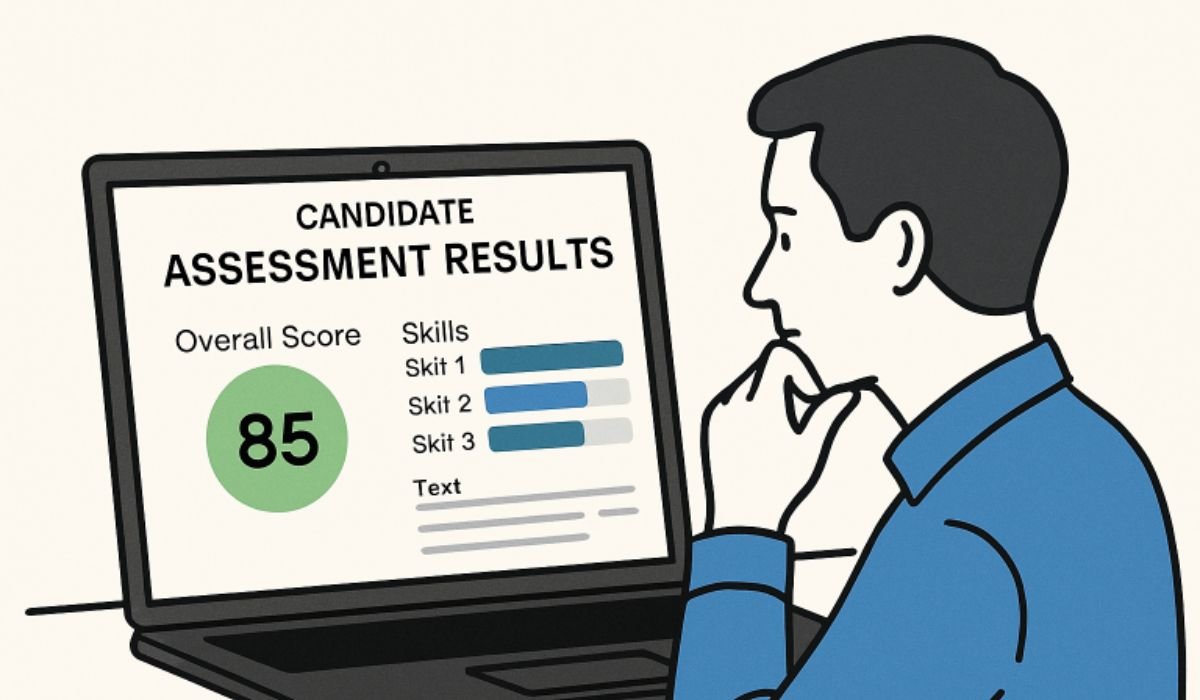
Key Takeaways
- Online pre-hire assessments help organizations make smarter, data-driven hiring decisions.
- Personality and aptitude tests increase efficiency and reduce bias in recruitment.
- AI and machine learning are enhancing assessment personalization and predictive power.
- Ethical considerations and transparency remain critical for long-term trust and effectiveness.
- Future trends include mobile-optimized platforms and enhanced video integration.
Table of Contents
- The Shift Towards Data-Driven Recruitment
- Understanding Pre-Hire Assessments
- The Role of AI and Machine Learning
- Benefits of Online Assessments
- Challenges and Ethical Considerations
- Real-World Applications
- Future Trends in Pre-Hire Assessments
- Conclusion
The Shift Towards Data-Driven Recruitment
The competitive nature of the job market has prompted companies to move beyond traditional hiring approaches. Businesses are increasingly integrating advanced, data-driven strategies to enhance their hiring processes. Supplementing interviews and resumes with digital tools, such as pre-employment testing, allows organizations to uncover hidden aspects of a candidate’s potential that traditional methods may overlook.
Online pre-hire assessments provide recruiters with a broader perspective on candidates, going beyond what’s written on a CV. By leveraging structured evaluations, hiring teams can identify candidates who not only meet the job description but also align with the organization’s values and team culture.
Companies benefit from an enhanced ability to screen applicants, minimizing unconscious biases that can influence face-to-face interviews. These objective assessments enable organizations to hire based on merit, thus fostering more diverse and effective teams.
The data collected through these tools can be analyzed to predict job performance, assess alignment with company culture, and inform employee retention strategies. This predictive value is why many leading organizations treat data-driven assessments as a critical part of their modern hiring toolkit.
Understanding Pre-Hire Assessments
Pre-hire assessments use standardized tests and questionnaires to evaluate key competencies and behavioral traits. These typically fall into two main categories:
- Personality Assessments: Focused on traits such as openness, conscientiousness, extraversion, agreeableness, and emotional stability. These insights help predict how employees are likely to interact within teams and handle workplace challenges.
- Aptitude Assessments: Examine critical reasoning, problem-solving capacity, and job-specific technical skills, offering employers an understanding of a candidate’s suitability for technical or analytical roles.
This dual approach supports a holistic evaluation, moving beyond hard skills to consider how a candidate might thrive within the company’s unique environment. For detailed insights on assessment validation and reliability, trusted sources such as SHRM provide further industry context.
The Role of AI and Machine Learning
Employers now rely on Artificial Intelligence (AI) and Machine Learning (ML) to process and interpret assessment data. These technologies allow assessments to be adaptive and responsive, adjusting question complexity in real-time based on a candidate’s responses. This means each candidate experiences a test tailored to their skill level, which reduces fatigue and enhances accuracy.
Advanced analytics also enable HR teams to uncover hiring patterns and candidate attributes that best predict future job success. As AI continues to evolve, companies benefit from accelerated, fairer decision-making and deeper insights into how talent pipelines align with organizational strategy.
Benefits of Online Assessments
- Efficiency: Automating candidate screening with online systems saves recruiters considerable time, allowing them to focus on later-stage interviews and candidate engagement.
- Consistency: Standardization ensures that every candidate is evaluated using identical criteria, thereby reducing subjectivity and inconsistent judgments.
- Predictive Validity: Reliable, validated assessments consistently predict job performance and cultural fit better than traditional techniques like resume reviews or unstructured interviews.
Companies that leverage online assessments often report lower turnover rates and improved employee satisfaction, as hires are better matched to both the role and the organizational climate. More information on the impact of assessment accuracy can be found via Harvard Business Review.
Challenges and Ethical Considerations
Despite their benefits, online assessments introduce several ethical and operational challenges. Key concerns include candidate data privacy, algorithmic bias, and over-reliance on automated scoring. Companies must ensure that their chosen tools are continually validated for fairness and relevance, and used only as part of a comprehensive, people-centered hiring approach.
Transparency is critical—candidates should understand how their data is used and what to expect from the assessment process. Providing feedback after testing can also enhance the overall experience and foster a more positive perception of the employer’s brand.
Real-World Applications
Organizations across various industries are experiencing quantifiable benefits from integrating assessment technology into their hiring processes. One example is the implementation of AI-driven aptitude and personality tests, which has resulted in streamlined evaluation processes, a 16% uptick in hiring efficiency, and measurable reductions in manual screening time. These case studies underscore the role of digital tools in modern, scalable hiring operations.
Retail, finance, healthcare, and technology—all sectors are embracing assessment tech to build more predictive, unbiased, and responsive recruitment strategies that match emerging workforce expectations.
Future Trends in Pre-Hire Assessments
The trajectory of pre-hire assessments continues to evolve in response to digital transformation in HR. Current emergent trends include:
- Mobile-Friendly Testing: As remote and hybrid work becomes the norm, assessments are now optimized for completion on smartphones and tablets, increasing accessibility for candidates globally.
- Video-Based Interviews: Combining asynchronous video responses with automated scoring enables recruiters to assess soft skills and personality in innovative, dynamic ways.
- Adaptive Testing: Adaptive algorithms analyze and modify the difficulty of questions in real-time, ensuring every candidate receives a uniquely tailored assessment experience.
These innovations promise a recruitment landscape that is more agile, inclusive, and effective, continually adapting to meet the needs of both organizations and candidates.
Conclusion
Online pre-hire personality and aptitude assessments are reshaping the way organizations approach talent acquisition. By leveraging data, AI, and adaptive testing strategies, companies are building more agile, efficient, and equitable hiring processes. Ethical use, transparent candidate communications, and staying current with technological advancements will remain essential to realizing the full potential of these tools, ensuring organizations not only hire the best talent but also build lasting, productive relationships with their employees.
YOU MAY ALSO LIKE: How a Mexico Recruitment Agency Improves Hiring Through Talent Acquisition Services